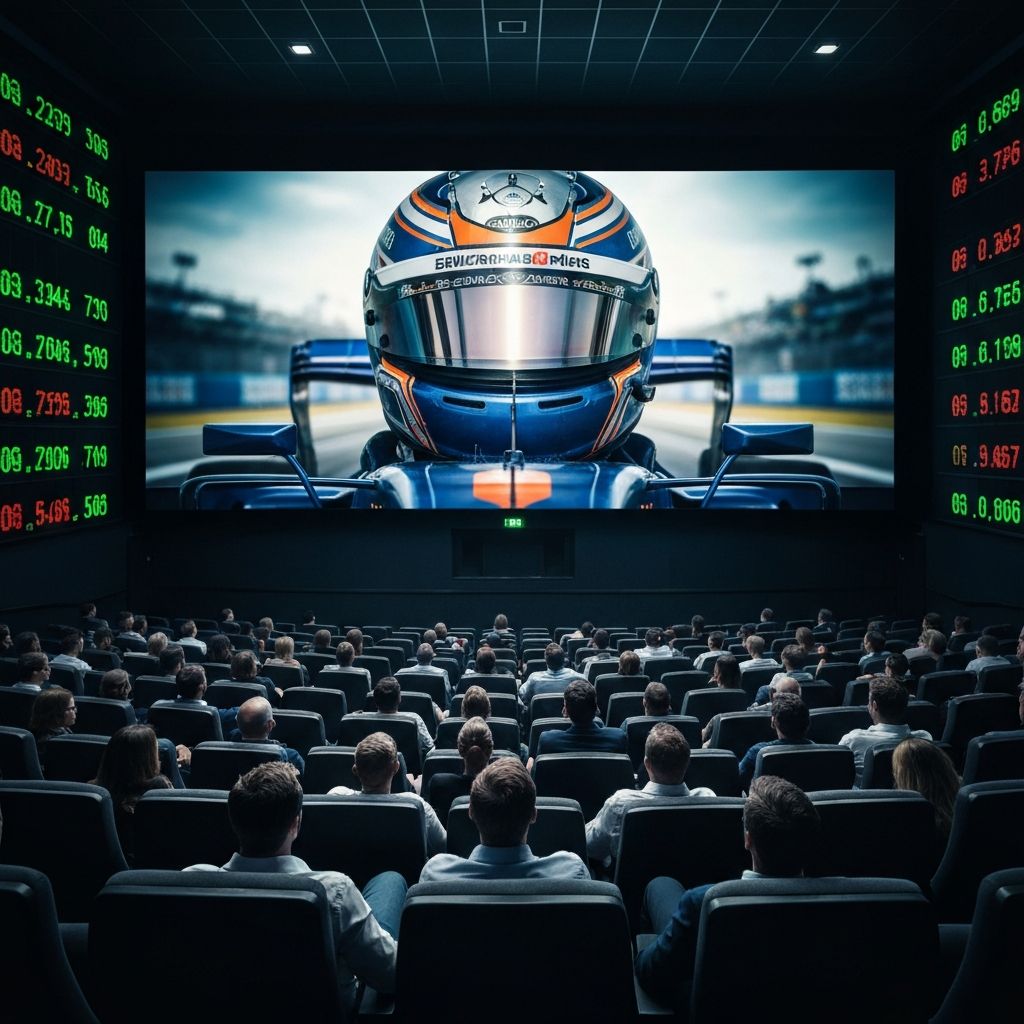
We May Solve Scarcity and Still Live in The Platform
Peter Diamandis predicted a future of technological abundance. The harder question is whether our politics, institutions, and appetite for power will let us live in it.

Browse practical writing on AI implementation, production reliability, product delivery, debugging, technical leadership, and the decisions behind modern software.
19 articles
Peter Diamandis predicted a future of technological abundance. The harder question is whether our politics, institutions, and appetite for power will let us live in it.

ChatGPT, Google AI Overviews, and Perplexity do not cite the web in the same way. Before trusting an AI visibility percentage, inspect its denominator, query set, time window, and citation unit.

Most of what we read about AI in software comes from clean demos and tidy lab examples. The real story starts when AI code meets thousands of users, messy data, and production pressure. Here is what actually happens, and where engineering still matters.

A demo request that looked like it came from the Philippines turned out to be a family-owned hat business in the United States. When I asked how they found us, the answer was one word: Gemini. Here is what that taught me about the future of product discovery.

To get scalable code from ChatGPT, Claude, or Gemini, you need to understand how these models actually think. Here is the math behind why they write beautiful but non-performant code, and how to prompt your way out of it.

After 4 failed startup attempts as a non-technical founder, I learned the hard way that great ideas are not enough. Now AI has changed everything. Here is what I wish I knew earlier.

AI can analyze logs and find bugs in minutes like a senior engineer. But in edge cases and race conditions, it might confidently give you the wrong answer. Here is when to trust it and when to think twice.

The AI landscape is changing faster than you can drink your morning coffee. Here is how to maintain your sanity and focus as a founder when the world feels like a roller coaster.

Explore how AI code assistants like Claude Code reduce development time by 10x. Learn the critical role of human judgment, common mistakes to avoid, and why senior developers get 2.5-5x better results than junior developers when using AI tools.

The journey from a 2015 nonprofit vision to an $850B legal battle reveals the tension between idealism and capitalism in AI. What the OpenAI vs Musk trial means for business ethics.

Discover why traditional storefronts are disappearing. Learn how Agentic Commerce and LLMO optimization are reshaping e-commerce decisions forever.

AI reached 53% of the global population in three years, faster than any technology in history. But adoption is not adaptation. From AI-enhanced dating profiles to fabricated LinkedIn expertise, we are building versions of ourselves we have not earned. When 30% of dating app users use AI photos, and only 13% of schools have AI policies, the question is no longer what AI can do for us but what it does to us.

10,000 baby boomers retire every day. Each takes decades of unwritten operational knowledge with them, the kind no AI has been trained on. In mining, construction, and heavy industry, this isn't just a training problem. It's a $900 billion annual loss. Here's why current AI education fails, what a hybrid Human-AI training model could look like, and why the window to act is closing fast.

A skeptical CTO thought AI would replace him with a button. Five days and $140 in extra usage later, he became its fiercest advocate. This is the story of what happens when deep expertise meets AI amplification and why an old Persian proverb about warriors and armies is the most accurate description of Sam Altman's one-person billion-dollar company prediction.

A letter to the children who cannot yet vote, object, or consent about the autonomous weapons we normalized, the cures we chose not to build, the jobs we automated, the genes we may edit, and the planet we warmed. An honest accounting of what our generation chose to leave behind, and the irreversible inheritance we are creating at quarterly earnings speed.

80,000 tech workers were laid off in Q1 2026, half of whom were replaced by AI. Sam Altman predicts one-person billion-dollar companies. But the real opportunity is not in building unicorns. It is in gleaning the fields that industrial-scale AI cannot harvest. A stage-by-stage guide to the AI tools reshaping every phase of business, and why the most valuable grain is the one the combines leave behind.

Ray Kurzweil predicts nanobots in our bloodstream by the 2030s and escape velocity in longevity by 2032. The technology to conquer disease and perhaps death itself is on the horizon. So why is 80% of global venture capital flowing into AI weapons and space colonization while hospitals allocate just 4.2% of their IT budgets to AI? A philosophical examination of the VUCA world, the business of dying, and the singularity's broken promise.

From Gaza's Lavender algorithm to the 2026 Iran war's autonomous drone swarms, and Anthropic's historic stand against the Pentagon. This is the story of humanity's most dangerous choice: letting machines decide who lives and who dies. A philosophical examination of why removing humans from the AI kill chain may be the irreversible "original sin" of the technological age.

Singularity ≈ Recursive Self-Improvement → Rapid Capability Explosion → Loss of Predictability. Understanding Ray Kurzweil's AGI timeline reveals why we're running out of time to prepare.