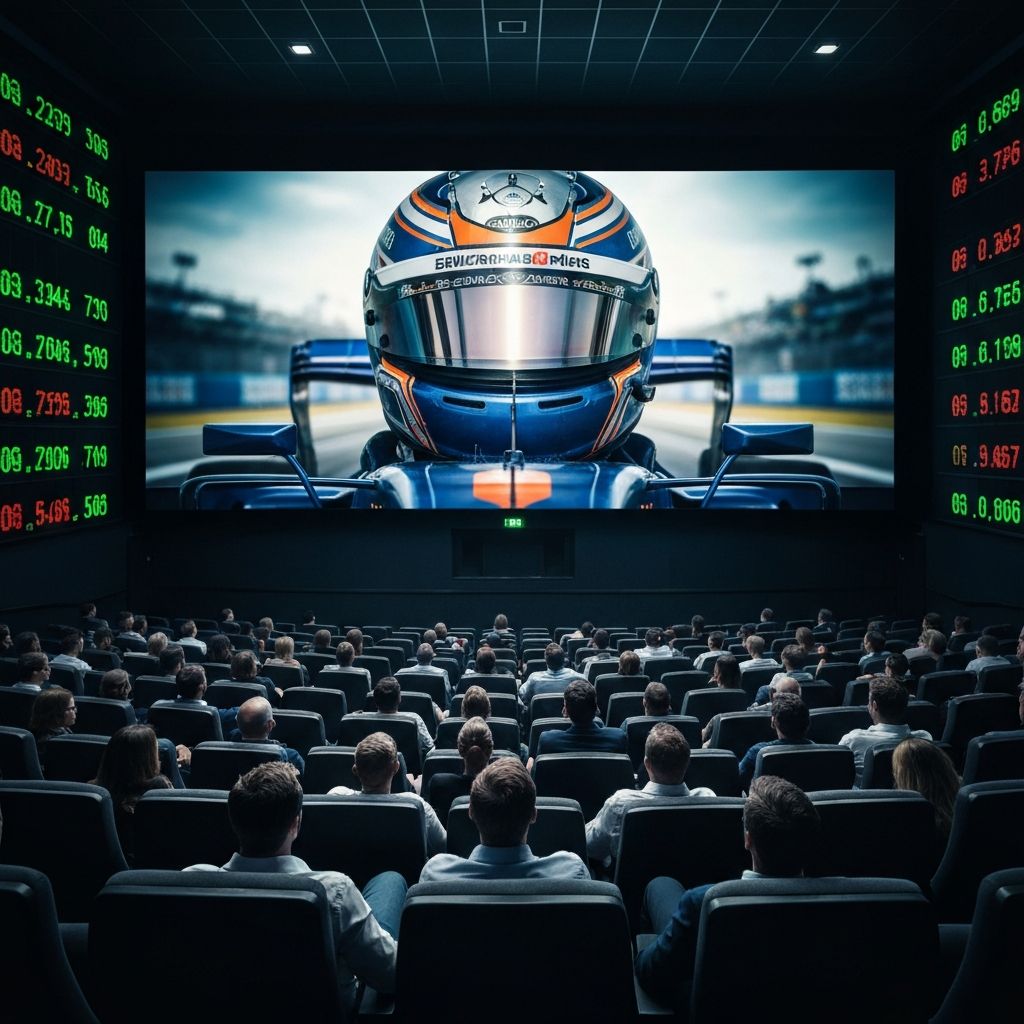
The Founder's Mindset in the AI Era: Focus on the Road, Not the Walls
The AI landscape is changing faster than you can drink your morning coffee. Here is how to maintain your sanity and focus as a founder when the world feels like a roller coaster.
Yesterday, I stumbled upon something unexpected in my Medium drafts: an unpublished article from July 2025 about AI tools and their applications. I had written it with such confidence, such certainty about where things were heading.
Reading it now? It felt like discovering a diary from another era.
The advice seemed almost quaint. The predictions, while not entirely wrong, missed the magnitude of what was coming. I found myself wondering: did I really think this was cutting-edge just a few months ago?
But here is the thing. That draft is not a failure. It is a perfect snapshot of how fast this world is moving.
The Roller Coaster or the Tunnel of Horror?
The AI landscape right now is like an amusement park. Depending on your perspective, you are either enjoying the thrill of a roller coaster or you have accidentally wandered into the tunnel of horror.
Every few days, while I am still finishing my morning coffee, Anthropic or OpenAI or some other player announces something that makes entire startups obsolete. Companies worth tens of millions, sometimes hundreds of millions of dollars, suddenly find their core value proposition evaporated.
This is not pessimism. This is reality.
The question is not whether this is happening. The question is: how do you navigate it?
The F1 Driver''s Secret
There is a piece of advice given to Formula 1 drivers that changed how I think about everything: focus on the road, not the walls.
When you are driving at 300 kilometers per hour, your instinct when approaching a turn is to look at the barriers. The walls. The danger. Your brain screams at you to watch the thing that could hurt you.
But drivers who do this crash more often.
The drivers who survive, who win, are the ones who train themselves to look only at the road. Where they want to go. The path forward.
If you have seen the movie F1 with Brad Pitt, you know the scene I am talking about. That final moment where he is approaching the finish line, and everything else disappears. The noise, the pressure, the millions watching. In that moment, he is not thinking about what could go wrong. He is flying.
That is the state we need to find.
When Startups Watch Racing Movies in a Stock Exchange Theater
Imagine a cinema where startup founders gather to watch racing movies. But this is not an ordinary theater. The walls are covered with stock tickers. Numbers changing. Green. Red. Companies rising and falling in real-time.
On the massive screen, a driver approaches the finish line. Pure focus. Pure presence.
In the audience, founders watch with a mix of anxiety and hope. Some see their own journey in that driver. Others see their fears.
The stock tickers keep changing. But the driver on screen does not care about them. He only sees the road.
How to Not Fall Apart
Let me be practical. Here is what I have learned about maintaining sanity as a founder in this environment:
Keep Your Focus Sharp
The news cycle will destroy you if you let it. Every day brings announcements that could feel like existential threats. Learn to filter. Ask yourself: does this actually affect my business today? Or is it noise?
Find Your People
Talk to other founders. Not competitors necessarily, but people who understand the journey. The isolation of building something can amplify every fear. Shared perspective is medicine.
Move Your Body
This sounds trivial. It is not. Exercise is not about fitness when you are in survival mode. It is about processing stress physically so it does not accumulate mentally. A 30-minute walk can save you from a spiral.
Write It Down
Ideas and fears both lose their power when you put them on paper. Write down what you are thinking. What you are worried about. What you might do. Then look at it from a distance. The paper holds the chaos so your mind does not have to.
Decide Without Attachment
Here is the hardest part: you must make decisions without being consumed by their potential outcomes. Make the best choice you can with the information you have. Then let go of the rest.
A friend once told me something that stuck: a man''s word is always two, and he should always stand by the second one.
What does that mean? It means your first reaction is often fear or impulse. Your second word, after reflection, is who you really are. Stand by that one.
The Only Path Forward
The AI era is not waiting for anyone to catch up. The pace is relentless. The uncertainty is permanent.
But founders have always operated in uncertainty. That is the job description. What has changed is the speed, not the fundamental challenge.
So here is what I know:
The draft I found from July 2025 is not embarrassing. It is evidence that I was in the arena, trying to understand, trying to contribute. And I am still here, still writing, still building.
The founders who will thrive are not the ones who predict every turn correctly. They are the ones who keep their eyes on the road when everything screams at them to look at the walls.
The movie ends. The credits roll. The stock tickers keep changing.
But somewhere, a founder closes their laptop, takes a breath, and gets back to work.
That is the only path forward. That has always been the only path forward.
Now, go focus on your road.
Frequently asked questions
How do I stay focused as a founder when AI is changing everything?
Focus on the road, not the walls. Like F1 drivers who perform better by looking at the track rather than barriers, founders should concentrate on their path forward rather than every threatening announcement. Filter news by asking: does this actually affect my business today?
How can founders maintain mental health during uncertainty?
Key practices include: talking with other founders who understand the journey, regular exercise to process stress physically, writing down ideas and fears to externalize them, and making decisions without being consumed by potential outcomes.
Is the AI disruption really that fast?
Yes. Companies worth tens or hundreds of millions of dollars are finding their core value propositions evaporated within months. An article written just a few months ago can already feel outdated. This pace is the new reality for founders.
What is the F1 driver mindset for founders?
F1 drivers who focus on the road rather than the walls have fewer crashes and better outcomes. For founders, this means training yourself to focus on where you want to go rather than all the things that could go wrong.
How do I make decisions under extreme uncertainty?
Make the best choice you can with available information, then let go of attachment to outcomes. As the saying goes: a man's word is always two, and he should stand by the second one. Your first reaction is often fear; your second, after reflection, represents who you really are.